I’m proud to be IICRC-certified and deeply familiar with Ocala’s unique water damage challenges—from the Silver Springs flood zones to Historic Downtown’s aging infrastructure and the irrigation-rich horse country estates. Whether you’re in the Silver River corridor or near Silver Springs Blvd, we guarantee a 60-minute response to safeguard your property and peace of mind.
Why Call Us First?
Quick Answer
The Florida Restoration Pros offers 24/7 water damage restoration services across Marion County, including neighborhoods like Silver Springs, Historic Downtown Ocala, and the Ocala National Forest watershed areas. Call us anytime at (352) 327-7240 for swift, expert help. Call (352) 327-7240 now.
Ocala’s water damage risks are tightly linked to its geography and waterways. The Silver River and Silver Springs area are designated flood zones prone to flash flooding, especially along Silver Springs Blvd corridor, where historic drainage struggles to keep pace with intense rainfall. The Ocala National Forest watershed feeds into local water tables, exacerbating moisture buildup and overflow during heavy storm events, primarily from June to September. Historic Downtown Ocala features many 1920s-era buildings with aging infrastructure, increasing vulnerability to seepage and water intrusion. Horse country estates across Marion County face unique challenges as high water tables and irrigation systems can saturate soil beneath slabs, causing hidden moisture issues. Localized flooding from thunderstorms or storm surge can quickly overwhelm drainage systems, leaving streets like NE 1st Street and neighborhoods near the Silver River susceptible to standing water and structural damage. Understanding these local risks is key to effective water damage prevention and restoration.
Secondary water damage causes in Ocala often stem from aging plumbing and infrastructure. Many homes built in mid-20th century neighborhoods still rely on older pipe materials prone to corrosion or cracking, leading to leaks or bursts. Appliance failures, such as washing machines or water heaters, are common culprits of sudden indoor flooding. Roof damage from Marion County’s regular storms can allow rainwater intrusion, especially in homes with older roofing materials or inadequate flashing. Additionally, Ocala’s high water table, influenced by the surrounding watershed and natural springs, can cause moisture to migrate through concrete slabs, leading to damp basements or crawl spaces. These hidden moisture sources often go unnoticed until mold or structural damage appears. Combined with frequent thunderstorm events bringing heavy rain and wind, these secondary sources further complicate water damage scenarios in Ocala homes and businesses.
In Ocala’s humid subtropical climate, untreated water damage rapidly escalates within 24 to 48 hours. Moisture trapped in building materials like wood, drywall, and insulation creates ideal conditions for mold growth, which can begin to colonize surfaces quickly, posing health risks to occupants. Structural components weaken as water saturates framing and foundations, increasing the chances of rot, warping, and even foundational shifts. Electrical systems exposed to water become hazardous, risking fire or failure. The combination of heat and humidity accelerates microbial growth, making timely mitigation crucial. Delaying water damage restoration in neighborhoods like Silver Springs or Historic Downtown, where building materials are often older and more susceptible, could lead to costly repairs and long-term health concerns.
Silver Springs Flood Zone
Silver Springs Blvd corridor, neighborhoods adjacent to Silver River
This area experiences frequent flash flooding due to proximity to the Silver River and overflow from Silver Springs. Aging drainage infrastructure struggles during heavy rains, leading to surface water accumulation and potential structural water intrusion.
Historic Downtown Ocala
NE 1st Street, Magnolia Avenue, and surrounding 1920s building districts
Older commercial and residential buildings here have aging plumbing and foundations prone to leaks and water seepage. Historic construction materials can retain moisture longer, increasing mold and deterioration risk.
Ocala National Forest Watershed Area
Peripheral neighborhoods near forest boundaries, including areas draining into local creeks
Natural watershed runoff and high water tables from the forest contribute to ground saturation and potential basement or slab moisture issues during seasonal rains.
Horse Country Estates
Rural estates west and south of Ocala with extensive irrigation systems
High water tables combined with irrigation overspray and drainage challenges create elevated risk of slab moisture intrusion and foundation weakening.
Ocala’s diverse neighborhoods each face distinct water damage challenges shaped by geography, infrastructure, and historical development. Understanding specific local risks—from flood zone proximity to aging building materials—is essential for effective prevention and restoration.
Most common: Flooding and flash flood risk
Silver Springs neighborhoods sit directly within federally designated flood zones that encompass areas along the Silver River and the Silver Springs Blvd corridor. Many homes were built between the 1960s and 1980s, featuring concrete slab foundations and older plumbing systems that are prone to leaks under stress from saturated soils. The proximity to the Silver River means that during heavy thunderstorms common in Marion County’s summer months, rapid flash flooding can inundate streets and properties with minimal warning. Drainage infrastructure in this area has struggled to keep pace with development and increasing storm intensity, leading to chronic water pooling. Flood waters often damage flooring, drywall, and electrical systems, while moisture intrusion into crawl spaces fosters mold growth. Homeowners here must be vigilant for early signs of water intrusion and prioritize emergency mitigation to protect both historic elements and modern updates.
Most common: Aging infrastructure and water seepage
Historic Downtown Ocala is characterized by 1920s-era commercial and residential buildings with aging plumbing and foundations that are vulnerable to water damage. Many buildings feature wooden framing and plaster walls that absorb moisture and deteriorate quickly if exposed to leaks or flooding. The older sewer and stormwater systems often back up during Marion County’s intense summer thunderstorms, causing water to infiltrate basements and lower floors. Roof aging and outdated flashing increase rainwater intrusion risk, especially during the frequent June-to-September thunderstorm season. Property owners in this district face challenges balancing preservation with modern waterproofing techniques. Swift water extraction and structural drying are critical to prevent mold and long-term damage to these irreplaceable historic structures.
Most common: Groundwater seepage and slab moisture
Properties on the edge of the Ocala National Forest watershed experience unique water damage risks related to natural drainage and elevated water tables. Homes here often sit atop permeable soils that allow groundwater migration into basements and slab foundations, especially during prolonged rainy periods. Many were constructed in the 1970s and 1980s with concrete slabs but limited moisture barriers. The subtropical climate combined with runoff from forested areas means high humidity and soil saturation, which can cause hidden moisture within structural components and promote mold growth. These conditions necessitate specialized drying and dehumidification techniques tailored to Marion County’s environment to prevent persistent dampness and structural weakening.
Most common: Irrigation oversaturation and high water table damage
The sprawling horse country estates west and south of Ocala are well known for their expansive irrigation systems supporting lush pastures. This heavy irrigation, combined with Marion County’s naturally high water table, creates conditions ripe for slab moisture intrusion and foundation settlement. Many estate homes feature newer construction but face challenges from soil saturation beneath slabs, which can cause cracking, uneven floors, and sewer line failures. The large acreage and rural location mean drainage systems must be carefully maintained to prevent localized flooding after intense thunderstorms common during summer months. Restoring water damage here often involves thorough moisture mapping and structural drying to protect both residential and equestrian facilities.
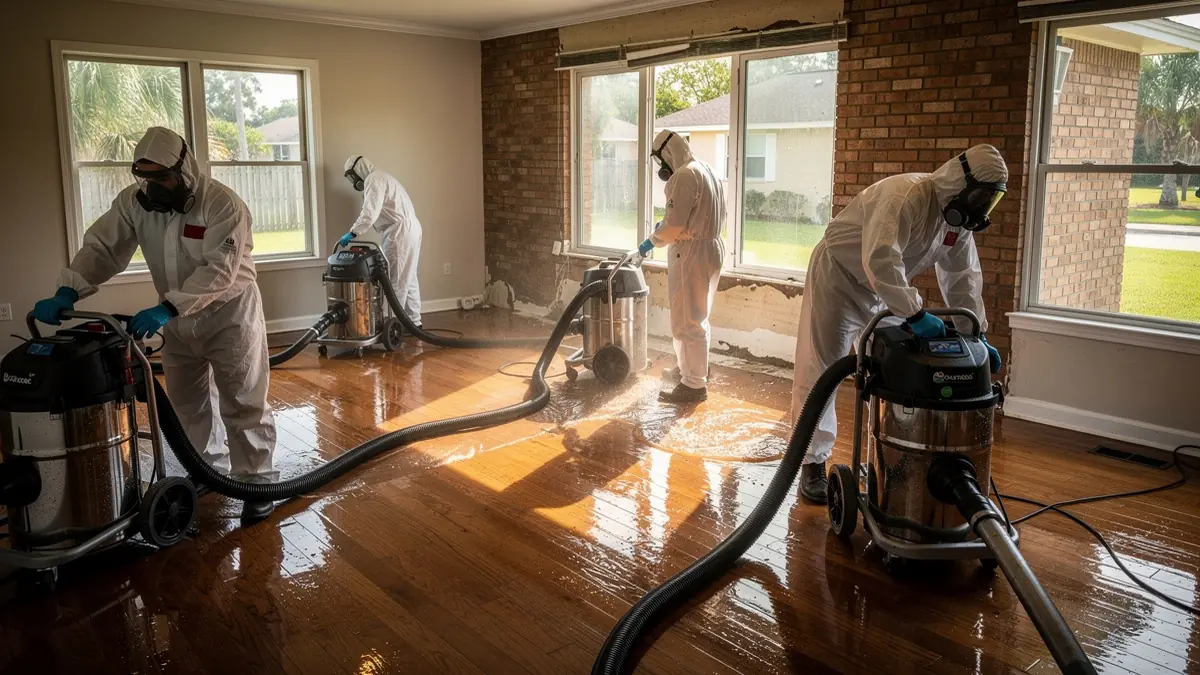
Our emergency water extraction services in Ocala focus on rapid removal of standing water caused by flash floods, burst pipes, or storm surge. Using specialized pumps and vacuums, we quickly mitigate damage in flood-prone areas like Silver Springs Blvd and Historic Downtown, minimizing property loss and mold risk.
We specialize in flood and storm surge restoration tailored to Ocala’s unique challenges, including Silver River overflow and heavy rainfall impacts. Our team restores homes and businesses affected by floodwaters, addressing both visible damage and hidden moisture in foundations and walls.
In Marion County’s humid subtropical environment, prompt structural drying and dehumidification are critical. We employ advanced equipment to reduce moisture levels in building materials, preventing mold growth and protecting the integrity of Ocala’s diverse building stock.
Post-water damage mold growth is a significant concern in Ocala’s climate. Our mold prevention and remediation services identify early microbial activity and use industry-leading treatments to ensure your home or business remains safe and healthy.
Category 3 sewage backups pose serious health risks in Ocala properties during flooding or plumbing failures. We provide thorough cleanup and disinfection to restore sanitary conditions, protecting occupants and property.
We offer careful contents restoration and pack-out services to protect your valuables from water damage and mold exposure in Ocala. Our team catalogs and treats items, providing safe storage and return after your property is restored.
Flood damage coverage in Marion County is a complex issue. While many homeowners rely on standard HO-3 policies, these generally exclude flood-related water damage, especially from surface water or storm surge. Marion County includes FEMA-designated flood zones such as Zone AE and Zone VE, which carry higher flood risk and mandatory flood insurance requirements for properties with federally-backed mortgages. The National Flood Insurance Program (NFIP) provides specific policies to cover flood damage, but many homeowners in Ocala mistakenly assume their standard insurance will cover flooding from events like Silver Springs overflow or Silver River surge. It’s essential to understand that flood insurance is a separate policy with its own terms and deductibles. Homeowners near flood-prone corridors such as Silver Springs Blvd or low-lying areas in horse country estates should seriously consider NFIP coverage to avoid uncovered losses.
When filing water damage claims in Ocala, thorough documentation is vital to secure appropriate coverage. Immediately capture photos and videos of all affected areas, including visible water, damage to flooring, walls, and personal property. Document timestamps and weather conditions, especially during known thunderstorm events common from June through September. Keep all receipts for emergency repairs or temporary accommodations. Contact your insurance carrier promptly to report the loss and understand policy deadlines for claims submission. Local adjusters may require inspections within a specific timeframe to evaluate the scope accurately. Detailed records strengthen your case, especially in complex claims involving flooding from Silver Springs or infrastructure failure in Historic Downtown Ocala. Early, organized documentation helps avoid delays or denials.
Working with insurance adjusters in Ocala requires preparation and knowledge to ensure a fair settlement. Adjusters use Xactimate software to estimate repair costs, but without proper documentation or an understanding of local risks, homeowners may face underpayment. Our team assists in providing comprehensive scope and detailed damage assessments, factoring in Ocala-specific concerns like slab moisture from high water tables and storm surge effects. If disputes arise or coverage is complicated by flood zoning, consulting a public adjuster familiar with Marion County can help maximize your claim’s value. Transparency, clear communication, and timely follow-up with carriers are critical throughout the restoration and claims process.
We respond within 60 minutes and begin detailed documentation immediately upon arrival to protect your claim.
(352) 327-7240In Ocala, water damage in homes often stems from both external and internal sources. Flooding along the Silver Springs Blvd corridor and surrounding Silver Springs Neighborhood is common during heavy rains, as historic drainage systems struggle to handle flash floods from the Silver River. Additionally, overflow from the Ocala National Forest watershed raises local water tables, increasing moisture intrusion risks. Inside homes, pipe bursts, failed appliances like washing machines, dishwashers, and water heaters, as well as HVAC condensate overflows and sewage backups, contribute heavily. Among these, internal plumbing failures are the most frequent cause of water damage in Ocala residences, largely because older homes in Historic Downtown Ocala and Horse Country Estates often have aging infrastructure. Our crews focus on quick extraction, thorough drying, and moisture monitoring to prevent lasting damage and mold growth in these vulnerable neighborhoods.
Water damage in Ocala’s commercial properties—ranging from office buildings in Historic Downtown to warehouses near Watershed Edge—can disrupt business operations severely. Whether it’s flooding from storm surges or internal issues like pipe bursts, our team prioritizes detailed documentation to assist with insurance claims and minimize downtime. Restaurants, retail stores, and multi-unit residential buildings in Marion County depend on our experienced restoration technicians to quickly assess damage, implement water extraction, drying, and structural repairs, ensuring businesses reopen swiftly and safely.
Untreated water damage in Florida’s humid climate can lead to mold colonization within 24 to 48 hours. Our AMRT-certified mold remediation team handles mold growth caused by flooding and leaks common in Ocala homes and businesses, especially in neighborhoods like Silver Springs and Historic Downtown. We use proven techniques to remove mold safely and prevent its return after water damage restoration. Our mold remediation services are a critical part of protecting your property’s health and structural integrity.
We also handle fire damage restoration, smoke and soot cleanup, and storm damage repair throughout Ocala and surrounding Marion County communities. Explore all our restoration services.
We guarantee a 60-minute response for water damage emergencies throughout Ocala neighborhoods including Silver Springs, Historic Downtown, and horse country estates. Our 24/7 availability ensures your property gets the immediate attention needed to minimize damage and speed recovery.
☎ (352) 327-7240 — Available 24/7