I’m an IICRC-certified water damage restoration specialist proudly serving Cape Coral’s most vulnerable neighborhoods including Yacht Club, Southwest Cape Coral, and the Spreader Waterway area. With over 400 miles of waterways, I guarantee a 60-minute response to protect your home from flooding anytime disaster strikes. Count on The Florida Restoration Pros to get your home dry and safe fast.
Why Call Us First?
Quick Answer
We provide 24/7 water damage restoration services across Lee County, focusing on Cape Coral neighborhoods like Yacht Club, Southwest Cape Coral, and Spreader Waterway. Call (239) 214-9309 for immediate assistance—your local water damage experts are just a phone call away. Call (239) 214-9309 now.
Cape Coral sits uniquely with over 400 miles of man-made canals linking to the Caloosahatchee River and Gulf of Mexico, making water damage a constant risk. Neighborhoods like Yacht Club, especially, face daily tidal flooding in season, while Southwest Cape Coral canal-front properties regularly see inundation during major tropical systems like Hurricane Ian’s catastrophic surge in 2022. The Spreader Waterway overflow affects many homes on streets like SE 16th Place and SE 15th Terrace, causing repeated flooding incidents. Even inland areas are not immune, as the city’s vast network of waterways means every canal home faces surge risks with fluctuating tides and storm surges. Streets along the waterfront—such as SW 32nd Terrace and SW 13th Avenue—are notorious for floodwaters quickly rising, making early water damage intervention critical in these flood-prone zones.
Beyond surge and storm flooding, Cape Coral’s aging infrastructure contributes to water damage risk. Many homes built in the 1970s and 80s feature galvanized steel and polybutylene pipes prone to corrosion and leaks, causing hidden water damage over time. Appliance failures—like ruptured water heaters or washing machines—are common in older Cape Coral homes, exacerbating moisture issues. Additionally, roof damage from frequent tropical storms can allow rain intrusion, leading to attic and ceiling leaks. The high water table throughout Lee County further complicates matters; slab foundations often absorb moisture, increasing the risk of mold growth beneath the house. These secondary causes mean water damage can develop slowly, unnoticed until it causes structural or health problems.
In Cape Coral’s hot, humid, subtropical climate, untreated water damage quickly becomes critical within 24 to 48 hours. Moisture trapped in walls and flooring promotes rapid mold growth, which can spread throughout the home and impact indoor air quality. Structural components like wood framing and drywall begin to deteriorate from prolonged exposure, potentially compromising home safety. Mold spores can trigger respiratory issues and allergic reactions for residents, especially vulnerable populations. The constant moisture accelerates decay and invites pest infestations, turning what might have been a manageable leak into a costly disaster. Swift professional intervention is essential to stop the progression and restore a healthy living environment.
Yacht Club Area
SE 47th Terrace, SE 46th Lane, Yacht Club Boulevard
Daily tidal flooding during season and high surge risk from Gulf storms create persistent water intrusion challenges, especially for canal-front homes.
Southwest Cape Coral
SW 32nd Terrace, SW 13th Avenue, SW 16th Place
Major tropical systems cause frequent canal overflow and flooding due to low-lying terrain and proximity to the Caloosahatchee River.
Spreader Waterway
SE 15th Terrace, SE 16th Place, SE 17th Avenue
Overflow from the Spreader Waterway during heavy rains or storms often leads to rapid interior flooding in adjacent neighborhoods.
Downtown Cape Coral
Del Prado Boulevard, Coronado Parkway
Older infrastructure and aging pipes combined with occasional flash flooding create secondary water damage risks outside direct surge zones.
Cape Coral consists of diverse neighborhoods each facing unique water damage challenges shaped by their proximity to canals, flood zones, and infrastructure age. Understanding localized risks helps homeowners prepare and respond effectively to surge, storm, or plumbing-related water damage.
Most common: Storm surge & tidal flooding
Yacht Club is a historic canal-front neighborhood with many homes built in the 1960s and 1970s featuring slab foundations and copper plumbing. The proximity to Caloosahatchee River and Gulf exposes properties to daily tidal flooding in season and severe surge events during hurricanes. Homes here often see water rise above seawalls causing damage to flooring, exterior walls, and landscaping. Mold growth and wood rot are common after surge events. The area’s aging seawalls and canal systems require constant maintenance to mitigate flood impact. Residents must be vigilant after tropical storms, as even moderate surges can cause significant water intrusion and costly repairs.
Most common: Canal overflow flooding
Southwest Cape Coral’s expansive canal network, built primarily during the 1980s, relies on a complex drainage system vulnerable to overflow during heavy rain or storm surge. Many homes feature galvanized steel and polybutylene water pipes known to corrode and leak with age, increasing internal water damage risks. Streets like SW 32nd Terrace and SW 13th Avenue frequently flood, especially after tropical depressions. Homeowners encounter issues with slab moisture infiltration due to the high water table, often leading to mold and weakened concrete slabs. Flood insurance is crucial here as standard policies exclude water rising from the canal system.
Most common: Waterway overflow and rainwater flooding
The Spreader Waterway area consists of neighborhoods developed in the late 1970s with many homes showing signs of aging infrastructure. The waterway itself can overflow during persistent heavy rains or storm surge, flooding adjacent streets like SE 16th Place and SE 15th Terrace. Homes often suffer from roof leaks and plumbing failures exacerbated by moisture intrusion from the surrounding saturated ground. The combination of slab foundations and frequent high moisture levels invites mold growth and structural weakening. Residents here often face insurance challenges due to flood zone designations and must maintain meticulous documentation after any water intrusion event.
Most common: Aging pipe leaks and flash flooding
Downtown Cape Coral features a mix of commercial and older residential buildings with some dating to the 1970s. The aging cast iron and galvanized water pipes in this area are prone to sudden leaks or bursts, leading to flooding unrelated to storm surge. Flash flooding occurs occasionally due to insufficient storm drainage combined with heavy tropical rains. This secondary water damage source often results in indoor flooding, compromised electrical systems, and mold issues. Many properties here do not fall within high-risk FEMA flood zones but still face significant risk from infrastructure failures requiring prompt restoration services.
Our Cape Coral emergency water extraction service quickly removes standing water from flooded homes, especially after hurricane surge or pipe bursts. We use industrial pumps and extraction tools to minimize damage and begin drying immediately, reducing mold risk in this high-humidity region.
Specializing in Cape Coral surge and flood restoration, we repair water damage caused by canal overflow and hurricane-driven flooding. Our team restores structural integrity and works with flood insurance carriers familiar with Lee County’s unique flood zones.
Using advanced drying and dehumidification equipment, we combat Lee County’s subtropical humidity to efficiently dry walls, floors, and crawlspaces, preventing mold and long-term structural damage in Cape Coral homes.
Post-water damage mold is a serious concern in Cape Coral’s warm climate. Our certified mold remediation team identifies and removes mold colonies to protect your family’s health and restore indoor air quality.
We handle Category 3 sewage and contaminated water cleanup in Cape Coral, ensuring safe removal and disinfection after sewage backups or storm-related contamination to prevent serious health hazards.
Our team carefully packs out, cleans, and restores valuable contents affected by water damage in Cape Coral homes, minimizing loss and expediting your property’s restoration process.
Flood damage in Lee County is generally excluded from standard homeowner (HO-3) policies, requiring separate flood insurance through FEMA’s National Flood Insurance Program (NFIP). Cape Coral’s flood zones range from low-risk Zone X to high-risk AE and VE coastal zones, with many canal-front properties falling into Zones AE or VE. These high-risk zones carry mandatory federal flood insurance requirements for mortgages but also mean higher premiums and strict rebuilding regulations after a flood event. Homeowners should understand that typical HO-3 policies cover water damage from pipe bursts or storm-related wind damage but not flooding from storm surge or rising canal water. Knowing your property’s flood zone designation is critical for proper insurance coverage and claims following storms like Hurricane Ian.
When filing a water damage claim in Cape Coral, thorough documentation is key to a smooth process. Capture clear photos and videos of all affected areas including flooded rooms, damaged belongings, and any structural issues. Record dates and times of the damage and initial contact with emergency services or restoration professionals. Keep receipts for any mitigation expenses such as emergency repairs or temporary lodging. Submit documentation to your carrier promptly, as many insurers have strict deadlines—often within 30 to 60 days. Early communication is essential, especially for flood-related claims in Zones AE and VE where adjusters may require elevation certificates or specialized inspections.
Working with adjusters in Cape Coral requires detailed knowledge of local water damage risks and repair costs. Adjusters typically use Xactimate software to estimate damage scopes, but without accurate local input, estimates can fall short—especially for surge-related structural repairs or mold remediation. We advise homeowners to provide comprehensive documentation and, if needed, seek a second opinion or hire a public adjuster experienced in Lee County’s flood zones. Public adjusters can help negotiate fair settlements and ensure the full scope of water damage is covered, preventing underpayment after costly events like major hurricanes or extensive pipe failures.
Our team responds within 60 minutes and begins detailed documentation immediately to support your insurance claim.
(239) 214-9309In Cape Coral, water damage in homes primarily stems from external causes like hurricane surge flooding and tidal flooding, especially in neighborhoods like Yacht Club and Southwest Cape Coral where canal-front properties face frequent water intrusion during tropical storms. Overflow from the Spreader Waterway also affects streets such as SE 16th Place and SE 15th Terrace. Interior issues are equally significant, with pipe bursts, appliance failures including washing machines, dishwashers, and water heaters, plus HVAC condensate overflows and sewage backups contributing to water damage. Among these, tidal and storm flooding are the most common and severe due to Cape Coral’s extensive canal system and proximity to the Caloosahatchee River and Gulf of Mexico. Our crews understand the urgency of extracting water, drying structures, and preventing long-term damage in this unique environment, combining industry standards with local expertise to restore homes quickly and thoroughly.
Businesses in Cape Coral, from office buildings and retail shops to warehouses, restaurants, and multi-unit residential complexes, face significant water damage risks linked to canal flooding and storm surge. Our experienced crews prioritize fast, effective water extraction and drying to minimize downtime. We work closely with property managers and insurance providers to document damage clearly and support claims, ensuring smooth restoration and business continuity. Understanding Cape Coral’s unique water risks helps us tailor solutions that protect commercial properties from prolonged interruptions and costly repairs.
Untreated water damage in Florida’s warm, humid climate can lead to mold colonization within 24 to 48 hours, making prompt action critical. Our AMRT-certified mold remediation specialists address both visible and hidden mold growth following water intrusion, using proven techniques to eliminate colonies and prevent recurrence. After flood-related water damage, we also implement targeted mold prevention strategies to safeguard your home or business. Our comprehensive mold remediation services are designed to protect health and property in Cape Coral’s challenging environment.
We also handle fire damage restoration, smoke and soot cleanup, and storm damage repair throughout Cape Coral and surrounding Lee County communities. Explore all our restoration services.
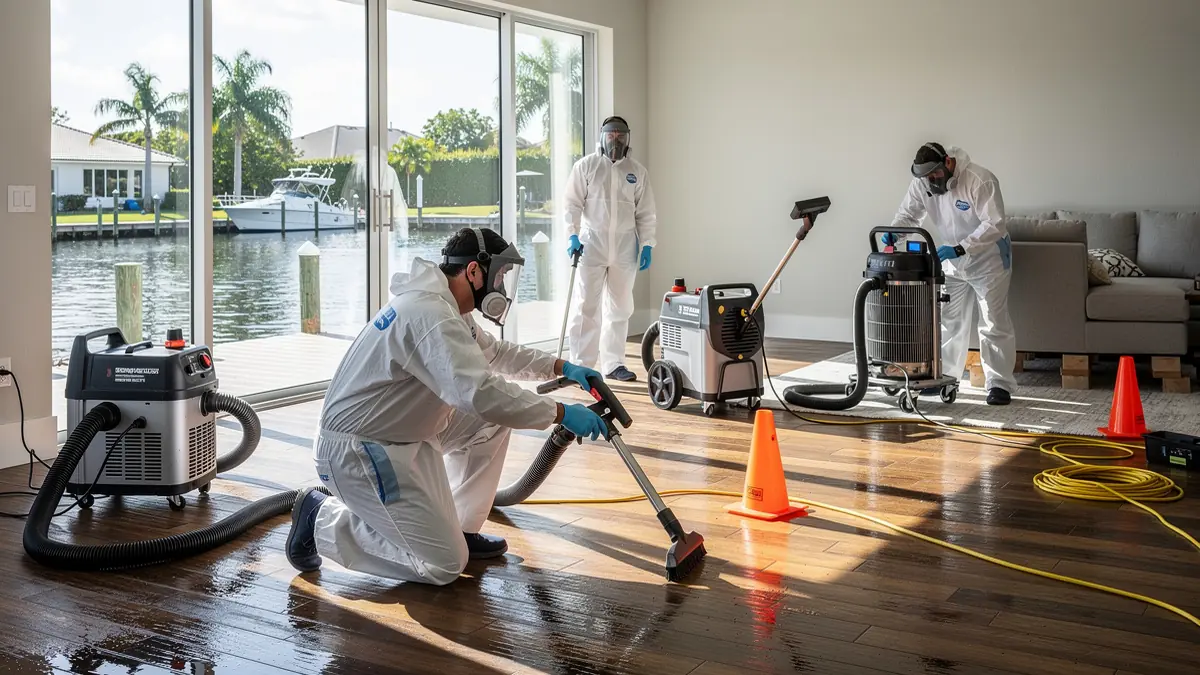
We guarantee a 60-minute emergency response across Cape Coral neighborhoods including Yacht Club and Southwest Cape Coral, available 24/7 to address water damage from storm surges or plumbing failures.
☎ (239) 214-9309 — Available 24/7