I’m a proud IICRC-certified restoration specialist with The Florida Restoration Pros, serving Clearwater neighborhoods like Clearwater Beach, Island Estates, Downtown Clearwater, and Countryside. We guarantee a 60-minute response to any water damage emergency in Pinellas County, ready to protect your home from flooding and storm surge impacts.
Why Call Us First?
Quick Answer
We offer 24/7 emergency water damage services across Pinellas County, including targeted neighborhoods like Safety Harbor, Sand Key, and Mandalay Channel. Call us anytime at (727) 218-5798 for fast, expert restoration in Clearwater and surrounding areas. Call (727) 218-5798 now.
Clearwater’s unique geography exposes it to multiple water damage risks. The city lies adjacent to Old Tampa Bay and the Mandalay Channel, with Clearwater Beach and Island Estates particularly vulnerable to storm surges from the Gulf of Mexico during Category 1 or higher hurricanes. Sand Key, a barrier island located south of Clearwater Beach, resides within a VE flood zone, signifying high-velocity wave action risk. Downtown Clearwater’s dense urban core struggles with retention and drainage, often leading to flash flooding during heavy rains. Stevenson Creek runs through Zone AE tidal flooding areas, impacting neighborhoods near its banks. Inland areas like Countryside and Safety Harbor, especially subdivisions developed in the 1970s, face frequent pipe failures and localized flooding. Streets near these waterways and tidal zones experience a higher likelihood of water intrusion during tropical storms and heavy rainfall events.
Beyond geographic factors, Clearwater’s aging infrastructure compounds water damage risks. Many homes in Countryside and Safety Harbor, constructed in the 1970s, have original cast iron or galvanized pipes prone to corrosion and failure, leading to sudden indoor flooding. Appliance malfunctions from water heaters, washing machines, and dishwashers also contribute to interior water damage emergencies. Roof damage from heavy rains or winds can allow water to infiltrate attics and ceilings, causing hidden leaks. Additionally, Clearwater sits atop an elevated water table common to Pinellas County, causing slab moisture issues that jeopardize foundations and increase mold risk if not properly mitigated.
When water damage goes untreated in Clearwater’s humid subtropical climate, problems escalate rapidly within 24 to 48 hours. Mold spores thrive in warm, moist environments, quickly colonizing drywall, insulation, and wood framing. Structural components can warp and weaken from prolonged exposure to moisture, compromising home safety. Indoor air quality suffers as mold and bacteria proliferate, posing health hazards to residents. Early intervention is critical to prevent extensive remediation costs and protect your family’s well-being.
Zone AE
Stevenson Creek vicinity, parts of Downtown Clearwater
Zone AE is a high-risk tidal flooding area, with elevations determined by base flood levels, making properties vulnerable to flooding during storm surges and heavy rains in Stevenson Creek and nearby Downtown Clearwater.
Zone VE
Sand Key barrier island
Sand Key sits in a high-velocity wave action Zone VE, exposing homes to powerful storm surge waves and severe flood damage during hurricanes, significantly increasing restoration urgency.
Gulf of Mexico Shoreline
Clearwater Beach, Island Estates
These waterfront neighborhoods frequently experience flooding from Gulf storm surge, especially in Category 1 or higher hurricanes, leading to rapid water intrusion and property damage.
1970s Subdivision Areas
Countryside, Safety Harbor
Older subdivisions feature aging pipes prone to failure causing internal flooding. Combined with inadequate drainage, these neighborhoods face persistent water intrusion risks.
Clearwater’s diverse neighborhoods each face distinct water damage challenges shaped by geography, infrastructure, and local flood risks. Understanding these differences helps homeowners prepare and respond effectively. Here’s a detailed breakdown of four key neighborhoods and their primary water damage concerns.
Most common: Storm surge flooding
Clearwater Beach is a prime example of a low-lying coastal neighborhood vulnerable to storm surge flooding from the Gulf of Mexico. Located on the western edge of Clearwater, its sandy shores and beachfront properties are regularly threatened by Category 1 and above hurricanes. Many homes and condominiums here are built on pilings or elevated foundations to mitigate flood risk. However, saltwater intrusion combined with high tides can cause seawater to flood streets and infiltrate basements or ground floors. The neighborhood’s proximity to Mandalay Channel also means that heavy rains can cause localized flooding, especially when combined with storm surge. Property owners often face damage to flooring, drywall, and electrical systems. The community’s history of storm events has made prompt water extraction and drying services essential to minimize long-term damage and mold growth.
Most common: Coastal flooding and tidal surge
Island Estates, situated on a man-made island near Clearwater Beach, experiences frequent flooding during storm surge and high tide events. The area is characterized by a mix of older single-family homes and waterfront properties, many constructed in mid-20th century styles with crawlspace foundations. Due to the tidal influence from the Gulf and proximity to Mandalay Channel, water levels can rise rapidly, overwhelming drainage systems. Flooding often results in water damage to flooring materials, cabinetry, and electrical outlets. The saltwater environment accelerates corrosion of plumbing and HVAC systems. Island Estates residents must be vigilant in monitoring weather warnings and maintaining flood defenses. Restoration here requires specialized knowledge to combat both fresh and saltwater damage while preserving structural integrity.
Most common: Urban retention and flash flooding
Downtown Clearwater faces unique water damage challenges caused by inadequate stormwater retention and urban runoff. The area’s dense development, including commercial buildings and older residential blocks, creates impervious surfaces that limit natural absorption. Streets like Cleveland Street and surrounding avenues often flood during heavy rains, leading to basement and ground floor water intrusion. The local infrastructure struggles to manage peak stormwater, occasionally resulting in sewer backups. Buildings with slab foundations may experience moisture wicking into concrete, compromising structural supports. The mix of older masonry and modern construction requires versatile restoration approaches. Rapid emergency response is critical here to protect businesses and residences from prolonged water exposure and mold proliferation.
Most common: Aging pipe failures and internal flooding
Countryside, a primarily residential neighborhood developed in the 1970s, is notorious in Clearwater for internal water damage caused by aging plumbing infrastructure. Many homes still contain original galvanized steel or cast iron pipes prone to corrosion and sudden rupture. Pipe failures often cause significant indoor flooding, damaging floors, walls, and personal contents. The neighborhood’s flat topography combined with an elevated water table can exacerbate moisture problems beneath slab foundations, leading to mold risk and structural degradation. Countryside homeowners typically require rapid professional mitigation to prevent secondary damage. Familiarity with older home construction and typical failure points is essential for effective restoration tailored to this community’s needs.
Our Clearwater emergency water extraction service quickly removes standing water from homes affected by flooding, storm surge, or pipe bursts. We use industrial-grade pumps and vacuums to minimize water damage and prevent mold growth, responding rapidly to protect your property along Old Tampa Bay and adjacent neighborhoods.
We specialize in restoring flood and storm surge damage in Clearwater’s vulnerable coastal zones like Island Estates and Sand Key. Our team handles saltwater intrusion, debris removal, and structural drying to return your home to pre-loss condition efficiently.
Pinellas County’s subtropical humidity challenges drying efforts after water intrusion. We employ advanced drying and dehumidification technology tailored to Clearwater’s climate to thoroughly remove moisture from walls, floors, and framing, preventing mold and structural damage.
Following water damage in Clearwater, mold growth can begin within 24-48 hours. Our mold prevention and remediation services target affected areas with EPA-approved treatments to safeguard your home’s air quality and structural health.
Sewage backflows and Category 3 water events in Clearwater homes require specialized cleanup. We safely remove contaminants and sanitize affected areas, protecting your family from health hazards common in urban and older neighborhoods.
Our contents restoration service in Clearwater includes careful pack-out, cleaning, and storage of your belongings during water damage repair. We protect valuables from further damage while your home is restored.
Flood damage is generally excluded from standard homeowner insurance policies (HO-3) in Pinellas County, including Clearwater. Properties located in FEMA-designated flood zones such as Zone AE (like Stevenson Creek areas) or Zone VE (Sand Key) require separate National Flood Insurance Program (NFIP) policies or private flood insurance. These zones indicate a high risk of flooding and surge impacts, so understanding your coverage is essential. NFIP policies provide federally backed flood insurance, while homeowner policies cover water damage from burst pipes or appliance failures but not external flooding caused by storms or tidal surges.
Documenting water damage meticulously is key to a successful claim in Clearwater. Capture timestamped photos and videos of affected areas immediately upon discovery, including visible water, damaged belongings, and any structural issues. Keep records of all communications with your insurance company and any emergency repairs made. File your claim promptly, as many carriers enforce strict deadlines—often within 72 hours. Retain receipts for professional services and temporary housing if applicable. Detailed documentation helps establish the cause, extent, and timeline of damage for insurer review.
Working closely with your Clearwater insurance adjuster ensures your water damage claim is fairly evaluated. Using industry-standard Xactimate software, adjusters create a scope of work and estimate restoration costs. Review this scope carefully to avoid underpayment, especially for hidden damages common in older homes or flood-prone zones. If discrepancies arise or claims are denied, consider consulting a public adjuster experienced in Pinellas County’s unique water damage challenges. They advocate on your behalf to maximize settlement and expedite repairs.
We begin documentation and restoration immediately upon arrival to ensure quick, comprehensive claims support.
(727) 218-5798Our crews understand that water damage in Clearwater homes comes from a variety of sources, both external and internal. The most common issue we see is flooding caused by storm surges, especially in vulnerable neighborhoods like Clearwater Beach and Island Estates where proximity to the Gulf of Mexico and Old Tampa Bay exposes properties to hurricane-driven water intrusion. Heavy rains often overwhelm drainage systems in areas like Downtown Clearwater and Countryside, leading to basement and foundation flooding. On the inside, burst pipes, malfunctioning appliances such as washing machines, dishwashers, and water heaters, as well as HVAC condensate overflows and sewage backups, frequently cause significant damage. Roof leaks during intense storms add to the risk, allowing water to penetrate ceilings and walls. Our local experience means we know how to quickly identify the source and extent of damage, taking into account Clearwater’s unique geography, so we can efficiently extract water and dry your home to prevent further harm and costly repairs.
Water damage in Clearwater’s commercial properties—whether office buildings, retail stores, warehouses, restaurants, or multi-unit residential complexes—can disrupt business operations severely. Our crews specialize in minimizing downtime by promptly addressing water intrusion, often complicated by urban drainage challenges in Downtown Clearwater. We assist businesses in documenting losses and coordinate closely with insurance providers to streamline claims. Understanding Clearwater’s flood risks and infrastructure limitations, we apply industry best practices to restore commercial spaces efficiently, helping you get back to business with as little interruption as possible.
In Florida’s humid climate, untreated water damage can lead to mold growth within 24 to 48 hours, posing health risks and structural concerns. Our AMRT-certified technicians provide thorough mold remediation services designed to eliminate colonies and prevent recurrence after flooding events common in Clearwater. We focus on drying and treating affected areas promptly to protect your property and family. If you’re facing mold issues following water damage, our experienced team is ready to help restore a safe, healthy environment.
We also handle fire damage restoration, smoke and soot cleanup, and storm damage repair throughout Clearwater and surrounding Pinellas County communities. Explore all our restoration services.
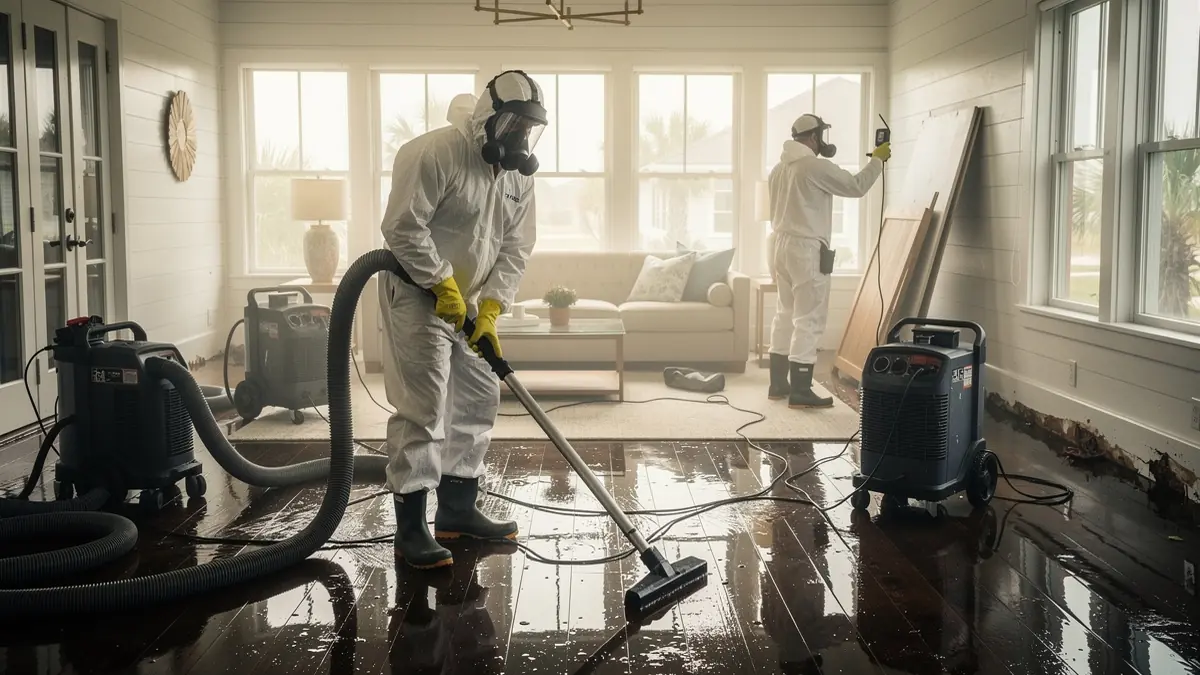
We guarantee a 60-minute emergency response to water damage incidents across Clearwater neighborhoods including Island Estates, Downtown, Countryside, and Safety Harbor. Our team is available 24/7 to stop damage before it worsens.
☎ (727) 218-5798 — Available 24/7