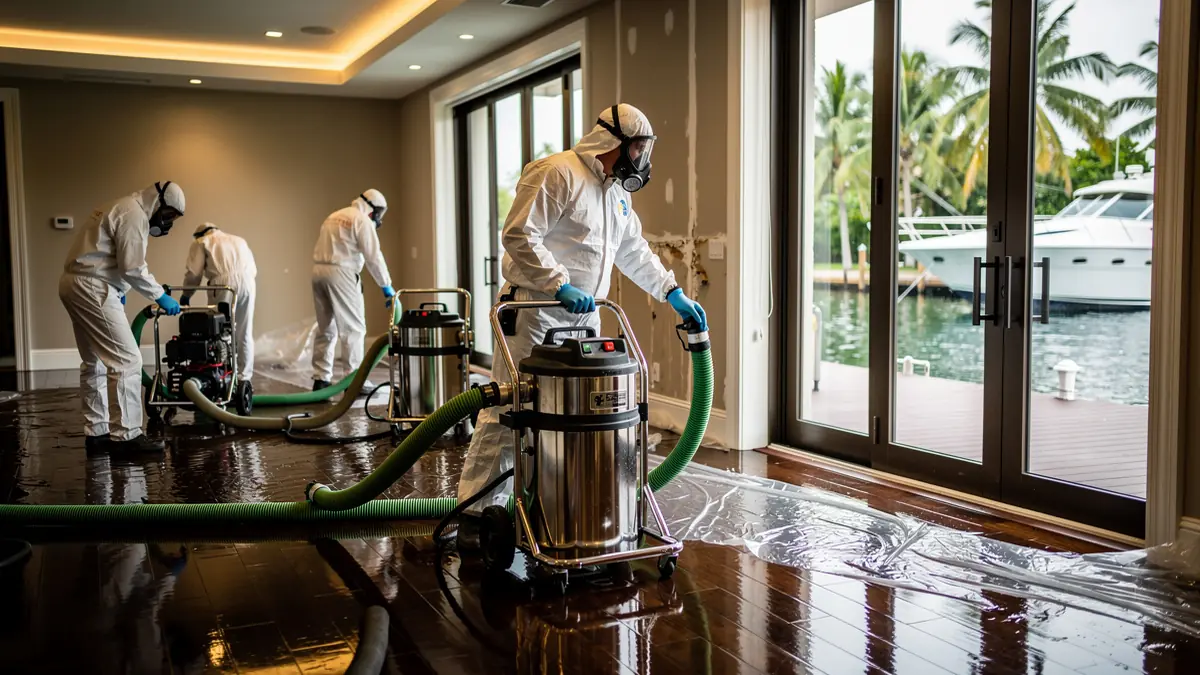
Water damage restoration crew working in Fort Lauderdale Florida home
● Fast 24/7 emergency water damage response across Broward County with unmatched local expertise.

Fort Lauderdale Water Damage Restoration

I’m IICRC-certified and proud to serve Fort Lauderdale neighborhoods like Las Olas Isles, Tarpon River, Progresso, and Victoria Park. With a 60-minute response guarantee, The Florida Restoration Pros are your trusted local partner for rapid water damage restoration. We understand the unique challenges of surge zones and tidal flooding here and respond swiftly to minimize your loss.

Why Call Us First?

  • Specialized water damage coverage understanding for Broward County flood zones
  • 60-minute guaranteed emergency response anywhere in Fort Lauderdale
  • IICRC-certified technicians with local surge and tidal flood expertise
  • Comprehensive insurance documentation support tailored to Fort Lauderdale policies
  • Trusted by residents in Las Olas Isles, Tarpon River, Progresso, and Victoria Park
  • Preferred vendor status with major Broward County insurance carriers
Call Now — It’s Free

Quick Answer

We offer 24/7 water damage restoration services throughout Broward County, focusing on Fort Lauderdale’s surge-affected neighborhoods like Las Olas Isles, Tarpon River, and Victoria Park. When water strikes, call us immediately at (754) 229-7916 for expert local help. Call (754) 229-7916 now.

Understanding Fort Lauderdale’s Unique Water Damage Risks

Fort Lauderdale’s geography presents a unique water damage challenge due to its extensive network of waterways and flood-prone zones. The city boasts over 300 miles of canals, making surge exposure a concern for nearly every neighborhood. Areas such as the New River and Intracoastal Waterway fall within FEMA Zone AE, where storm surge risk is significant. Las Olas Isles experiences tidal flooding multiple times annually, especially during king tide events from September to November, regularly flooding streets like S.E. 10th Street and East Las Olas Boulevard. Neighborhoods including Tarpon River, Progresso, and Victoria Park also lie within AE zones, exposing residents to recurrent flooding and surge damage. The combination of low elevation, proximity to tidal waterways, and frequent king tides means water intrusion can be rapid and severe, impacting basements, first-floor living areas, and structural integrity.

Beyond natural flooding, secondary water damage causes in Fort Lauderdale often stem from aging infrastructure and local environmental factors. Many homes built in the mid-20th century still rely on original cast iron or galvanized piping, prone to corrosion and leaks. Appliance failures—like malfunctioning water heaters or washing machines—are common triggers for indoor flooding. Roof damage from hurricane-force winds or heavy rains can lead to water intrusion in attics and upper floors. Additionally, Broward County’s high water table creates slab moisture issues, increasing the risk of concrete slab leaks and gradual water seepage beneath homes. These factors, combined with the subtropical climate, accelerate deterioration and escalate water damage risks even without direct storm surge.

In Fort Lauderdale’s humid subtropical climate, untreated water damage escalates rapidly within 24 to 48 hours. Moisture fosters aggressive mold growth, which thrives in warm, damp environments common here. Mold spores can colonize walls, floors, and HVAC systems, posing health risks to residents. Structural materials like drywall, wood framing, and insulation weaken and warp, compromising home stability. Electrical systems exposed to water risk short circuits and fire hazards. The combination of persistent humidity and residual moisture worsens damage and raises repair costs dramatically if restoration efforts are delayed.
Fort Lauderdale’s Water Damage Risk by Zone

New River AE Zone

East Las Olas Boulevard, S.E. 10th Street, Downtown Fort Lauderdale

This area faces frequent tidal surges from the Intracoastal Waterway and New River, causing regular street flooding especially during king tides and tropical storms.

Las Olas Isles Surge Zone

Isles Drive, Hendricks Isle, East Las Olas Isles

Situated on barrier islands, these streets experience multiple tidal flood events annually, with surge waters entering homes and garages, especially during seasonal high tides.

Tarpon River AE Zone

Tarpon River Drive, N.W. 9th Avenue

This neighborhood’s proximity to canals places it at risk for both storm surge and canal overflow, exacerbated by aging drainage infrastructure.

Victoria Park AE Zone

N.E. 5th Street, N.E. 6th Avenue

Victoria Park’s low elevation and older homes with slab foundations face risks from rising groundwater and surge flooding during hurricanes and king tide events.

Fort Lauderdale Neighborhood Water Damage — What We See

Fort Lauderdale’s diverse neighborhoods each present unique water damage risks influenced by geography, infrastructure, and flood zone designations. Understanding these hyper-local factors helps homeowners prepare and respond effectively to water damage events. Here’s a breakdown of key neighborhoods and their primary water damage concerns.

Las Olas Isles

Most common: Tidal Surge Flooding

Las Olas Isles is a collection of man-made islands bordered by the Intracoastal Waterway, making it highly vulnerable to tidal surge flooding multiple times yearly. Residential buildings, many constructed in the 1970s and 1980s, feature slab-on-grade foundations and older plumbing systems prone to leaks. Frequent street flooding after king tide events see water levels rise onto driveways and into ground floors, especially on Isles Drive and Hendricks Isle. Saltwater intrusion accelerates corrosion in plumbing and electrical systems, complicating restoration. Residents often face mold growth and structural damage after surge events due to the subtropical climate’s high humidity. Preventive measures and prompt professional restoration services are essential here to mitigate long-term damage.

Tarpon River

Most common: Canal Overflow and Pipe Leaks

Tarpon River’s location adjacent to a dense canal network exposes it to both storm surge and groundwater flooding. The neighborhood’s building stock includes many mid-century homes with original cast iron and galvanized pipes, which frequently develop leaks or bursts under pressure from aging and saline water exposure. Streets like Tarpon River Drive and N.W. 9th Avenue often see localized flooding during tropical storms, overwhelming drainage. The high water table in Broward County adds slab moisture challenges, leading to hidden water damage beneath flooring. Residents here often contend with secondary damage from appliance failures and roof leaks exacerbated by the humid environment. Timely water extraction and structural drying are vital to prevent mold and deterioration.

Victoria Park

Most common: Groundwater Intrusion and Slab Moisture

Victoria Park features many older homes built on concrete slabs in FEMA Zone AE, where rising groundwater and tidal surge pose persistent risks. The neighborhood’s location near canals and low-lying streets such as N.E. 5th Street creates conditions for water to seep under foundations, causing slab moisture and structural weakening. Plumbing systems often include older piping susceptible to corrosion from local saline exposure. Roof damage from seasonal storms can contribute to interior water ingress. In this humid subtropical climate, untreated moisture rapidly fosters mold growth within wall cavities and under floors. Fort Lauderdale residents here require proactive maintenance and swift restoration response to mitigate damage and health hazards.

Progresso

Most common: Tidal Flooding and Aging Infrastructure

Progresso is a historic Fort Lauderdale neighborhood with a mix of early 20th-century homes and modern infills. Many older structures have plumbing systems dating back decades, increasing the likelihood of pipe failures and leaks. Positioned within Zone AE, Progresso faces regular tidal flooding from the nearby New River and canal system, especially during king tides and storm surges. Streets like N.E. 9th Avenue and N.E. 14th Street often experience transient flooding, impacting basements and ground-level interiors. The combination of high humidity, frequent water intrusion, and deteriorating infrastructure creates a high risk of mold, wood rot, and electrical damage. Residents benefit from rapid emergency water extraction and comprehensive insurance support.

Fort Lauderdale-Specific Water Damage Services

Fort Lauderdale Insurance: Flood Insurance vs. Standard Homeowner’s Policy

Homeowners in Broward County need to understand the difference between flood insurance and standard homeowner’s policies. Most Fort Lauderdale homes fall within FEMA flood zones AE and VE, where flood risk is elevated. Standard HO-3 policies exclude flood damage, requiring separate NFIP or private flood insurance for coverage. Zone AE indicates areas with a 1% annual chance of flooding and mandatory flood insurance for federally backed mortgages. VE zones face additional wave action risks, demanding stricter construction standards and insurance considerations. Without flood insurance, claims related to tidal surge or storm flooding events often get denied, leaving homeowners financially exposed.

Documenting water damage in Fort Lauderdale is critical for successful insurance claims. Homeowners should immediately photograph affected areas, including street flooding in front of the property, interior water levels, damaged belongings, and structural damage. Maintain a detailed timeline of events, including when water intrusion occurred and restoration service arrival. Retain all repair estimates, invoices, and communication with insurance carriers. Timely notification to your insurer, typically within 30 days, is essential to meet policy deadlines. Early and thorough documentation supports coverage approval and expedites claim processing.

Working effectively with insurance adjusters in Fort Lauderdale requires clarity and diligence. Adjusters often use Xactimate software to estimate repair scopes and costs, but underestimation is common in surge-prone areas with specialized damage. Providing detailed documentation and contractor estimates helps ensure fair compensation. If you encounter consistent undervaluation, consider hiring a public adjuster familiar with Broward County’s flood risks and restoration standards. Their expertise can maximize your claim payout and reduce stress during the claims process.

Fort Lauderdale Insurance Documentation

  • Photograph all water intrusion points and street flooding outside your Fort Lauderdale home
  • Capture images of damaged personal property and structural elements
  • Record dates and times of water exposure and restoration service arrival
  • Save all repair and restoration estimates with detailed scope descriptions
  • Notify your insurance company promptly, ideally within 30 days
  • Keep copies of all correspondences with your insurance adjuster and carrier
  • Document any temporary repairs made to mitigate further damage
  • Retain contractor licenses and certifications used for repairs
  • Monitor claim progress and request written explanations for any denials
  • Consult a public adjuster if you suspect inadequate claim settlements

Post-flood surge or pipe failure in Fort Lauderdale?

Our team responds within 60 minutes, starting documentation and mitigation from the moment we arrive.

(754) 229-7916

Fort Lauderdale Water Damage FAQ

What is Fort Lauderdale’s primary flood and surge risk? +
Fort Lauderdale’s primary flood and surge risk stems from its extensive canal system and proximity to tidal waterways such as the New River and Intracoastal Waterway. Most neighborhoods, including Las Olas Isles, Tarpon River, and Victoria Park, lie within FEMA Zone AE, indicating a high likelihood of flooding during king tides and tropical storms. These zones require residents to maintain separate flood insurance policies, as standard homeowner policies exclude flood damage. Frequent nuisance tidal flooding events make surge damage a year-round concern, particularly during the September-November king tide season. Proper preparation, rapid response, and appropriate insurance coverage are essential to mitigate financial and structural losses.
How fast does mold grow after water damage in Fort Lauderdale’s climate? +
In Fort Lauderdale’s warm, humid subtropical climate, mold can start to develop within 24 to 48 hours of water exposure. High humidity and temperatures between 70°F and 90°F create optimal conditions for mold spores to colonize damp materials like drywall, wood, and insulation rapidly. Immediate water extraction and structural drying are critical to prevent microbial growth. Delays in mitigation dramatically increase mold’s spread and the cost of remediation, along with potential health risks. Therefore, contacting a professional restoration service within the first day of water damage is imperative to minimize mold proliferation.
Does homeowner insurance cover flooding in Fort Lauderdale? +
Standard homeowner insurance policies (HO-3) in Fort Lauderdale do not cover flooding caused by tidal surges, storm floods, or rising water from canals and rivers. Because much of Fort Lauderdale lies in FEMA flood zones AE and VE, flood insurance through the National Flood Insurance Program (NFIP) or private carriers is necessary to secure coverage for these events. Without flood insurance, any claims related to groundwater intrusion or surge flooding are likely excluded. It’s important for Fort Lauderdale homeowners to evaluate their flood risk and maintain appropriate flood insurance to protect against financially devastating water damage.
What’s the first thing to do after water damage in my Fort Lauderdale home? +
Immediately ensure your safety by turning off electricity if safe and necessary. Document the damage thoroughly with photos and videos, capturing flooding levels inside and outside your home. Contact your insurance company to report the loss within policy deadlines, then call The Florida Restoration Pros for a rapid 60-minute emergency response. Avoid attempting major cleanup or repairs yourself to prevent further damage or health risks. Prompt professional mitigation limits mold growth, structural deterioration, and insurance complications.
How long does water damage restoration take in Fort Lauderdale? +
Restoration timelines vary based on the water damage category and severity. Emergency extraction typically takes hours initially, followed by several days of structural drying and dehumidification to combat Broward County’s persistent humidity. Mold remediation and reconstruction can extend the process to weeks depending on affected materials. Homes impacted by tidal surge often require more extensive repairs than isolated pipe leaks due to saltwater contamination. Our team provides detailed timelines after assessment but prioritizes quick response to minimize total restoration time.
Are there unique water damage risks specific to Fort Lauderdale I should know about? +
Yes, Fort Lauderdale’s combination of extensive man-made canals, low elevation, and frequent king tide events creates a unique water damage profile. Unlike other cities, many neighborhoods experience nuisance tidal flooding multiple times annually, leading to chronic moisture exposure. Aging mid-century infrastructure, including original plumbing and slab foundations, further exacerbates risks. Saltwater intrusion accelerates corrosion and mold growth. Residents must be vigilant about maintaining older homes and securing flood insurance tailored to local surge and tidal flooding patterns.

Complete Water Damage & Restoration Services in Fort Lauderdale

Residential Water Damage in Fort Lauderdale

In Fort Lauderdale, water damage in homes frequently stems from both external and internal sources. The city's unique geography, with over 300 miles of canals and neighborhoods like Las Olas Isles facing regular tidal flooding, makes surge and storm flooding the most common external causes, especially during hurricane season and king tide events. Roof leaks during heavy rains also contribute significantly to water intrusion. Inside the home, pipe bursts, often due to aging plumbing or pressure fluctuations, and appliance failures such as washing machines, dishwashers, water heaters, and HVAC condensate overflows are common culprits. Sewage backups further complicate damage in lower-lying areas like Tarpon River and Victoria Park. The combination of Fort Lauderdale's flood-prone zones and the high water table means that surge and flood water intrusion top the list of causes. Our crews understand these risks intimately and act swiftly to control and restore water damage before it worsens, protecting your property and health every step of the way.

Commercial Water Damage in Fort Lauderdale

Water damage in Fort Lauderdale's commercial properties—ranging from office buildings and retail spaces to warehouses and restaurants—can halt business operations abruptly. Neighborhoods such as Progresso, with mixed-use developments, often face flooding risks from nearby waterways and storm surges. Our team prioritizes rapid water extraction and drying to minimize downtime, while meticulously documenting damage for insurance claims. We work closely with property managers and insurers to streamline the restoration process, ensuring businesses resume normal function as soon as possible without compromising structural integrity or safety.

Mold Remediation in Fort Lauderdale

In Florida’s warm, humid climate, untreated water damage can lead to mold colonization within 24 to 48 hours. That's why our AMRT-certified mold remediation specialists act quickly to halt growth and prevent further spread after flood or leak events. We use proven techniques to remove mold safely and implement post-flood prevention measures tailored for Fort Lauderdale homes and businesses. Our mold remediation services are designed to restore healthy indoor environments and protect your property long term.

We also handle fire damage restoration, smoke and soot cleanup, and storm damage repair throughout Fort Lauderdale and surrounding Broward County communities. Explore all our restoration services.

Nearby Florida Markets We Serve

Water damage in Fort Lauderdale? Rapid surge and pipe failure response is critical.

We guarantee a 60-minute response to water emergencies in Fort Lauderdale neighborhoods such as Las Olas Isles, Tarpon River, and Victoria Park. Available 24/7, we’re on-call to stop damage fast and begin restoration immediately.

☎ (754) 229-7916 — Available 24/7

The Florida Restoration Pros

2598 E Sunrise Blvd, Ste 2104, Fort Lauderdale, FL 33304

(754) 229-7916