I’m proud to serve Melbourne’s diverse neighborhoods—from the surge-prone Indian River Lagoon areas to the historic Eau Gallie district downtown, and the residential zones along Minton Road and New Haven Ave. As an IICRC-certified water damage restoration expert, I guarantee a rapid 60-minute response to keep your home safe and dry.
Why Call Us First?
Quick Answer
We provide 24/7 emergency water damage restoration across Brevard County, including Melbourne Beach, South Melbourne, and Eau Gallie. Trust The Florida Restoration Pros for swift, local expertise—call us anytime at (321) 352-5748. Call (321) 352-5748 now.
Melbourne’s geography presents unique water damage challenges due to its proximity to several waterways and flood-prone zones. The Indian River Lagoon and Banana River surge zones frequently expose nearby communities to flooding during tropical storms and hurricanes. Coastal areas like Melbourne Beach along the Atlantic Ocean fall within VE zones—high-velocity wave impact areas—along the busy A1A corridor, demanding specialized restoration readiness. Downtown Melbourne’s historic Eau Gallie district struggles with aging stormwater infrastructure, which can overwhelm during heavy rains. South Melbourne’s residential neighborhoods often experience flash flooding during Brevard County’s intense summer thunderstorms. Furthermore, key corridors such as Minton Road and New Haven Avenue are lined with retention ponds that occasionally overflow, compounding flood risks. This combination of surge zones, flood plains, and urban drainage issues requires vigilant water damage prevention and quick restoration response in Melbourne.
Secondary causes of water damage in Melbourne include the aging infrastructure common throughout the city’s older neighborhoods. Many homes and buildings still rely on older pipe materials, such as galvanized steel or cast iron, which are prone to corrosion and rupture. Appliance failures—like malfunctioning water heaters or washing machines—also contribute to indoor flooding. Roof damage from tropical storms or fallen debris enables rainwater intrusion, especially in areas where homes have older shingles or flat roofs. Additionally, the high water table in Brevard County can cause slab moisture issues, leading to persistent dampness that can weaken foundations and increase mold risk. These underlying vulnerabilities make regular maintenance and early detection critical to minimizing water damage impacts.
In Melbourne’s humid subtropical climate, untreated water damage rapidly escalates within 24 to 48 hours. Moisture trapped in walls, flooring, and framing quickly fosters mold growth, which poses serious health risks and complicates remediation. Structural components like drywall and wood can swell, warp, or rot, undermining the home’s integrity. Electrical systems may corrode or short-circuit, creating fire hazards. The warm, moist conditions common during Brevard County’s summer thunderstorm season accelerate these processes, making immediate water extraction and drying essential to prevent costly secondary damage and preserve occupant safety.
Indian River Lagoon Surge Zone
Neighborhoods along the lagoon including Eau Gallie and south Melbourne
These areas face frequent flooding during tropical storms and hurricanes due to storm surge and high tides, posing a significant risk of water intrusion and structural damage.
Melbourne Beach VE Zone
Coastal properties along A1A in Melbourne Beach
High-velocity wave action during storms subjects these homes to severe flooding and erosion, demanding specialized restoration techniques and flood insurance.
Downtown Eau Gallie Flood Zone
Historic downtown Melbourne Eau Gallie district
Aging stormwater infrastructure often fails during heavy rain, causing basement and street flooding, especially in low-lying commercial and residential properties.
Minton Road / New Haven Ave Retention Pond Overflow Zone
Residential neighborhoods adjacent to Minton Road and New Haven Avenue
Overflow from retention ponds during intense summer thunderstorms leads to sudden localized flooding, impacting homes and roadways.
Melbourne’s neighborhoods each face distinct water damage risks shaped by their geography, infrastructure, and proximity to water bodies. Below, we break down how surge zones, aging pipes, and local drainage affect areas like Eau Gallie, South Melbourne, Melbourne Beach, and the Minton Road corridor.
Most common: Aging infrastructure flooding risk
Eau Gallie stands as one of Melbourne’s oldest districts, with many homes dating back to the mid-20th century. Buildings often have galvanized steel or early copper plumbing, prone to corrosion and leaks. The historic stormwater system struggles to handle today’s rainfall volumes, resulting in frequent localized flooding. Water intrusion typically affects basements and crawl spaces, leading to drywall saturation and wood rot. Residents report periodic sewer backups during heavy rains, compounding water damage risks. Quick response and structural drying are essential to preserve these vintage homes’ integrity and prevent mold proliferation.
Most common: Residential flooding from summer thunderstorms
South Melbourne’s residential streets are vulnerable to flash flooding during Brevard County’s intense summer storms. Many homes feature slab-on-grade construction with limited drainage, increasing risk of water pooling indoors. Aging asphalt and clogged storm drains along neighborhood roads exacerbate runoff. Residents often face water entering garages and low-lying rooms, causing damage to flooring and electrical systems. The subtropical humidity accelerates mold growth following untreated flooding. Regular maintenance of gutters and swift professional intervention after storms help mitigate long-term damage in this community.
Most common: Coastal surge and VE zone flooding
Melbourne Beach properties line the vulnerable Atlantic coast along A1A within FEMA’s VE zone, where wave velocity during storms is high. Homes here face repeated flooding from storm surge, saltwater intrusion, and beach erosion. Many structures are elevated but still at risk of water damage to lower floors and critical utilities. The salt content of surge water increases corrosion of building materials, requiring specialized remediation. Flood insurance is a must for residents due to mandatory NFIP policies in this area. Restoration often includes structural drying, debris removal, and mold prevention tailored to saltwater exposure.
Most common: Retention pond overflow flooding
The Minton Road and New Haven Avenue corridor is lined with retention ponds designed to manage stormwater, but these systems can overflow during heavy Brevard County thunderstorms. Nearby homes, especially those with older foundations and minimal grading, experience basement and yard flooding. The pond water often contains sediment and organic material, increasing contamination risk. Aging pipe infrastructure in this area can exacerbate backups. Prompt water extraction and dehumidification are critical to prevent structural damage and microbial growth in these frequently impacted neighborhoods.
Our Melbourne-based team provides rapid emergency water extraction tailored to local flooding from tropical storms, retention pond overflow, and pipe failures. We deploy advanced pumps and vacuums within 60 minutes to minimize water intrusion and damage.
Specializing in Melbourne’s surge and flood zones, we restore homes affected by Indian River Lagoon tides, Atlantic Ocean storm surge, and heavy rain flooding with expert debris removal, drying, and structural repair.
In Melbourne’s humid subtropical climate, we utilize industrial dehumidifiers and drying equipment to prevent mold and structural deterioration after water intrusion from storms or plumbing failures.
Post-water damage, our Melbourne mold remediation addresses rapid fungal growth fueled by heat and humidity, ensuring safe indoor environments and preventing long-term health risks.
Category 3 sewage backups in Melbourne homes require specialized cleanup to remove biohazards and restore sanitation, especially in flood-prone low-lying neighborhoods.
We carefully pack out, restore, and protect your personal belongings from water damage in Melbourne homes, preserving valuable items during structural drying and repairs.
Flood insurance in Brevard County is distinct from standard homeowner policies. Many Melbourne properties fall within FEMA-designated flood zones like AE and VE, which are part of the National Flood Insurance Program (NFIP). While HO-3 policies cover water damage from internal sources such as burst pipes, they explicitly exclude flood-related losses. Zone AE indicates areas with a 1% annual flood risk but moderate wave action, whereas Zone VE represents coastal areas with high-velocity wave impact, often requiring additional flood insurance coverage. Homeowners in these zones must carry separate flood policies to protect against surge and flood damage, especially in surge-prone Melbourne Beach and lagoon-front neighborhoods.
Documenting water damage for insurance claims in Melbourne requires thorough and timely evidence collection. Begin by photographing all visible damage—walls, ceilings, floors, and personal belongings—as soon as water intrusion is discovered. Record the date and time of the incident, and keep copies of all related notices, such as storm warnings or utility reports. A detailed inventory of damaged items with approximate values is essential. Promptly notify your insurer and adhere to their claim submission deadlines, which can vary but often require initial contact within 24 to 72 hours. Retain receipts for any emergency repairs or professional remediation services initiated to mitigate further damage.
Working effectively with adjusters in Melbourne involves ensuring that your water damage scope aligns with Xactimate standards commonly used in Brevard County. Be present during inspections to point out all damaged areas, including hidden moisture pockets in walls or crawl spaces. Underestimation of damage scope is a frequent issue; if you suspect underpayment, consider obtaining an independent restoration estimate or consulting a public adjuster familiar with local flood and surge complexities. Public adjusters help navigate policy nuances and can advocate for comprehensive coverage, especially in zones like Eau Gallie or Melbourne Beach, where flood and surge risks complicate claims.
Our team begins documentation and mitigation immediately upon arrival to ensure prompt and thorough claims support.
(321) 352-5748Water damage in Melbourne homes arises from a mix of external and internal sources. External threats include hurricane surge and storm flooding, especially in neighborhoods near the Indian River Lagoon and Banana River, where flood-prone zones are common. Coastal areas like Melbourne Beach face high-velocity wave impacts along the A1A corridor, making surge-related water intrusion a frequent challenge. Roof leaks during heavy rain and floodwater intrusion through low-lying areas also contribute significantly. Internally, pipe bursts, appliance failures such as washing machines, dishwashers, water heaters, HVAC condensate overflow, and sewage backups are common culprits. Among these, storm flooding combined with surge effects is the most prevalent form of water damage in Melbourne because of the city's geography and seasonal tropical storms. Our crews understand these local conditions deeply, enabling us to respond quickly and apply industry-best processes that include thorough water extraction, drying, and dehumidification tailored to Melbourne’s unique environment.
Commercial properties in Melbourne—from office buildings and retail centers to warehouses, restaurants, and multi-unit residences—face water damage risks similar to those in residential settings, intensified by the scale and complexity of operations. In areas like the Minton Road Corridor and South Melbourne, storm flooding and plumbing failures can disrupt daily business functions. Our teams prioritize swift water removal and drying to minimize interruption, working closely with business owners to document damage and coordinate with insurance providers. We know how critical timely restoration is to getting Melbourne businesses back on track without prolonged downtime or loss of revenue.
In Florida's humid climate, untreated water damage can lead to mold growth within 24 to 48 hours, posing health risks and structural concerns. Our AMRT-certified teams specialize in mold remediation, using proven techniques to halt colonization quickly and prevent recurrence after flooding events common in Melbourne neighborhoods. We integrate mold prevention into our restoration process to protect your home or business long-term.
We also handle fire damage restoration, smoke and soot cleanup, and storm damage repair throughout Melbourne and surrounding Brevard County communities. Explore all our restoration services.
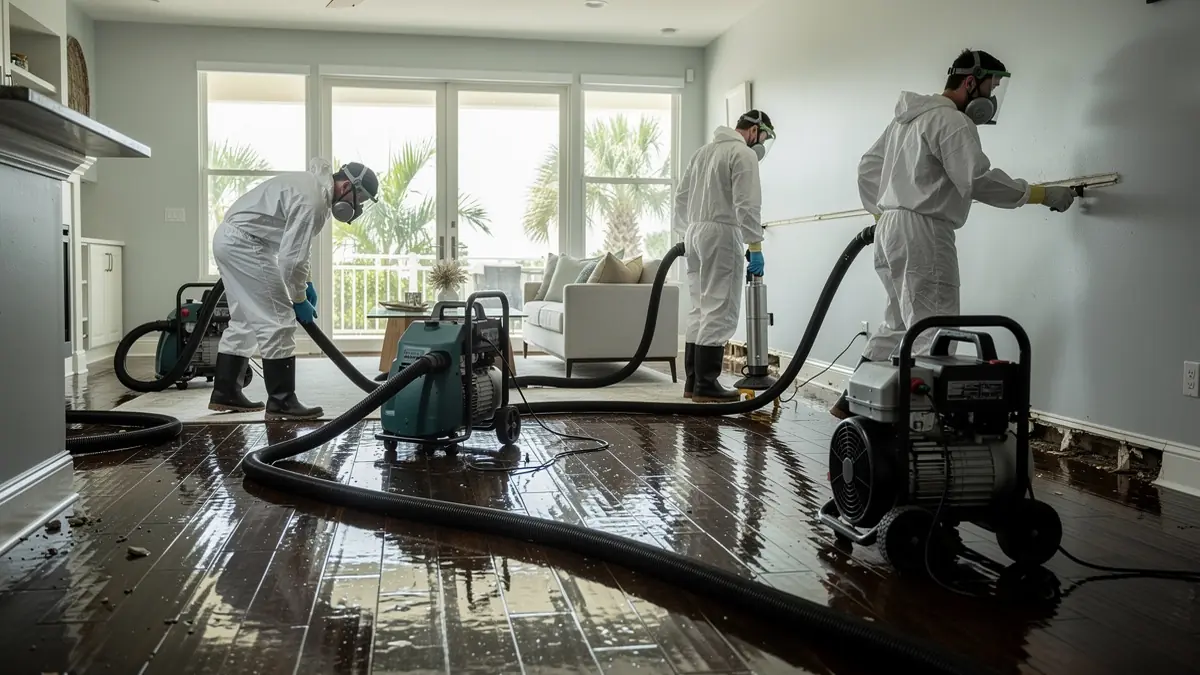
We offer a 60-minute emergency response for water damage across Melbourne neighborhoods including Eau Gallie, South Melbourne, and Melbourne Beach. Our team is available 24/7 to tackle flooding, pipe bursts, and storm surge damage swiftly and effectively.
☎ (321) 352-5748 — Available 24/7