I’m an IICRC-certified water damage restoration specialist with deep experience serving Titusville neighborhoods like Historic Downtown, Garden Street corridor, Merritt Island Causeway area, and Mosquito Lagoon surroundings. We guarantee a rapid 60-minute response to minimize damage and protect your home or business from water intrusion’s worst effects. Count on us for expert care and fast service, any time of day or night.
Why Call Us First?
Quick Answer
We provide 24/7 emergency water damage restoration throughout Titusville and Brevard County, including Garden Street, Historic Downtown, and Merritt Island Causeway. Call The Florida Restoration Pros anytime at (321) 352-5682 for immediate, local response and professional water damage services. Call (321) 352-5682 now.
Titusville’s unique geography makes it particularly vulnerable to water damage risks. Situated along the Indian River Lagoon, the city often faces flooding from surge zone AE areas, especially during heavy rain or storm events. The Mosquito Lagoon wetlands to the north contribute seasonal overflow concerns, while tidal flooding is a chronic issue along Garden Street and the SR 50 corridor. Historic Downtown Titusville, with infrastructure dating back to the 1940s and 50s, struggles with aging plumbing that can exacerbate water intrusion. The proximity to Kennedy Space Center and the Merritt Island Causeway places parts of Titusville in surge zone AE, making them vulnerable to high tides and hurricane-induced storm surges. The impact of Hurricane Matthew in 2016 demonstrated the potential for major flooding in the Indian River Lagoon basin, highlighting the city’s ongoing susceptibility to both coastal and inland water damage events. These waterways and flood zones require vigilant preparedness and rapid restoration response to protect local properties and residents.
Beyond natural flooding, Titusville properties face secondary water damage causes that often go unnoticed. Many homes and buildings constructed mid-20th century still rely on aging pipe materials prone to corrosion and failure, leading to leaks or bursts. Appliance failures—such as water heaters, washers, and HVAC units—are common culprits of indoor water damage in the area. The prevalent high water table in Brevard County also contributes to slab moisture issues, especially during the rainy season, allowing groundwater to seep into foundations and lower levels. Roof damage from storms or poor maintenance further compounds risk, allowing rainwater intrusion that can quickly escalate. Combined, these factors create a complex water damage profile requiring specialized knowledge of local infrastructure and environmental conditions for effective mitigation.
In Titusville’s warm, subtropical climate, untreated water damage quickly worsens within 24 to 48 hours. Moisture trapped inside walls, flooring, and structural cavities fosters rapid mold growth, which can cause health issues like allergies and respiratory problems. Prolonged dampness deteriorates framing, drywall, and flooring materials, weakening structural integrity and increasing repair costs. Within just one or two days, untreated water can create conditions for wood rot and swelling, leading to irreversible damage. Health risks multiply as microbial colonies multiply in humid air, especially in homes near the Indian River Lagoon surge zones where saltwater intrusion can accelerate corrosion and decay. Prompt professional intervention is critical to stop this cascade and restore safe, dry living environments.
Indian River Lagoon Surge Zone AE
Merritt Island Causeway, parts of Garden Street
This zone is highly susceptible to storm surge flooding due to its low elevation and proximity to tidal waters, leading to rapid water intrusion during hurricanes or heavy storms.
Mosquito Lagoon Wetland Overflow
Northern Titusville neighborhoods adjacent to wetlands
Seasonal wetland overflow here causes frequent minor flooding that can saturate soils and impact foundations, especially during the rainy season.
Historic Downtown Titusville
Downtown streets including Indian River Avenue
Aging 1940s-50s infrastructure leads to frequent plumbing failures and combined sewer overflows, increasing the risk of indoor water damage.
SR 50 Corridor Tidal Flooding
Garden Street and SR 50 intersection
Tidal fluctuations combined with roadway runoff cause recurrent flooding, threatening commercial properties and homes near this critical corridor.
Titusville’s diverse neighborhoods each face unique water damage risks due to their geography, infrastructure age, and proximity to flood zones. Understanding these hyper-local challenges helps homeowners prepare and respond effectively. Below, we break down key neighborhood profiles highlighting their primary water damage vulnerabilities and restoration considerations.
Most common: Aging infrastructure and plumbing failures
Historic Downtown Titusville features many buildings constructed in the 1940s and 50s, with original plumbing systems often composed of galvanized steel or early copper piping prone to corrosion and leaks. This vintage infrastructure frequently fails under increased pressure or during heavy rains, leading to significant indoor water damage. Combined sewer systems in this area can back up during storm surges, compounding flood effects. Residents often face water intrusion through basements and crawlspaces, with damages including swollen drywall, damaged hardwood floors, and mold growth. The historic nature of the buildings requires specialized restoration techniques to preserve architectural details while mitigating water damage. Flooding is exacerbated by proximity to the Indian River Lagoon surge zone, meaning storms and high tides can cause rapid inundation. Restoration here demands swift action to stabilize structures and prevent long-term deterioration.
Most common: Tidal flooding and storm surge
The Garden Street corridor, intersecting with SR 50, is a hotspot for tidal flooding due to its low-lying position near the Indian River Lagoon. This neighborhood experiences chronic flooding during high tides, king tides, and hurricanes. The infrastructure includes a mix of commercial and residential buildings where storm drains sometimes cannot handle the surge volume, resulting in water pooling on streets and seeping into basements and ground floors. Properties along Garden Street often suffer from water intrusion through foundation cracks and door thresholds. The combination of saltwater and freshwater flooding accelerates material degradation, especially affecting wood framing and concrete slabs. Residents here must be vigilant during hurricane season as surge-driven flooding can occur quickly. Restoration often involves floodwater extraction, structural drying, and corrosion prevention to maintain building integrity.
Most common: Coastal surge and flooding
The Merritt Island Causeway neighborhood lies within FEMA’s Zone AE surge area and is directly exposed to Indian River Lagoon tidal influences and hurricane storm surges. Homes in this area are often built on slab foundations with older plumbing systems that can be overwhelmed during flood events. Floodwaters here typically bring saltwater contamination, compounding drying and mold prevention challenges. The proximity to Kennedy Space Center means that infrastructure is critical, and any water damage can disrupt both residential and commercial operations. Typical damage includes waterlogged flooring, mold infestation, and electrical system corrosion. Because surge zone flooding can be rapid and deep, emergency water extraction and structural drying are vital to preserve property values and health safety.
Most common: Wetland overflow and groundwater seepage
Neighborhoods adjacent to the Mosquito Lagoon wetlands experience frequent groundwater saturation and occasional overflow during heavy rains and seasonal wet periods. These areas are characterized by high water tables that promote slab moisture intrusion, leading to damp basements and crawlspaces. Homes here often face persistent humidity challenges which foster mold growth and wood rot if not addressed promptly. Older homes with concrete block foundations are particularly vulnerable to seepage through cracks. The wetland overflow creates a slow, chronic water damage risk rather than sudden flooding, requiring ongoing monitoring and preventive maintenance. Restoration in this neighborhood typically includes moisture barrier installation, dehumidification, and foundation waterproofing to combat persistent dampness.
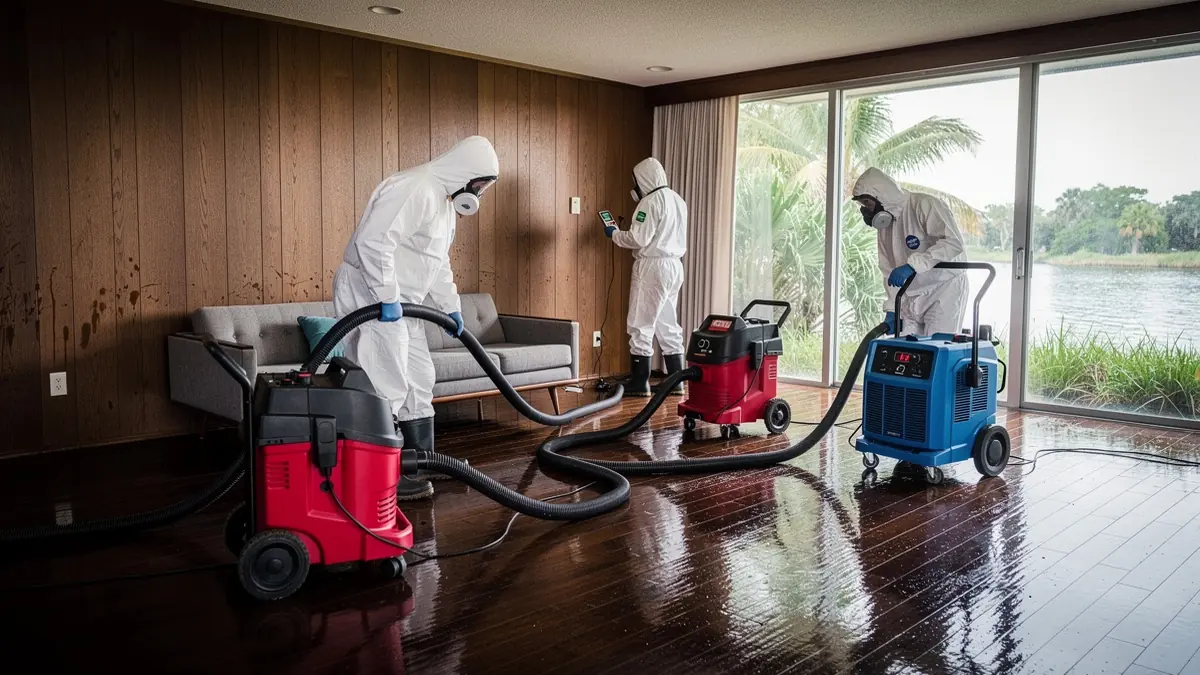
Our Titusville emergency water extraction service responds rapidly to remove standing water caused by flooding, pipe bursts, or appliance failures. Using powerful pumps and vacuums, we mitigate damage quickly to protect your home and belongings from further harm and mold development.
Specializing in Titusville’s flood and storm surge recovery, we restore homes impacted by Indian River Lagoon overflow and hurricane surge. Our team handles water removal, structural drying, and corrosion prevention tailored to coastal flood conditions.
In Brevard County’s humid climate, thorough structural drying and dehumidification prevent mold and wood rot. Our technicians use advanced drying equipment to eliminate moisture trapped in walls, floors, and framing across Titusville properties.
Post-water damage mold growth is a serious concern in Titusville’s subtropical environment. We assess, contain, and remove mold colonies, employing EPA-approved methods to restore healthy indoor air quality.
Category 3 water from sewage backups or floodwaters in Titusville pose health hazards. We safely remove contaminated water, disinfect affected areas, and ensure thorough sanitation to prevent illness and structural damage.
Protect your valuables during Titusville water damage restoration with our contents pack-out service. We inventory, clean, and restore furniture, electronics, and personal items offsite, safeguarding them from further harm.
Flood damage in Brevard County, including Titusville, typically falls outside standard homeowner insurance policies. Areas designated as FEMA flood zones—particularly Zone AE and Zone VE near the Indian River Lagoon and Merritt Island Causeway—require separate National Flood Insurance Program (NFIP) flood insurance. Homeowners’ HO-3 policies exclude flood coverage, meaning damage from storm surge or rising tides will not be reimbursed without flood insurance. Zone AE signifies areas with a 1% annual chance of flooding and base flood elevations determined, while Zone VE includes coastal areas with additional velocity hazard from waves, demanding higher premiums and stricter building codes. Understanding these distinctions helps Titusville residents secure proper coverage and avoid costly out-of-pocket repairs after a flood event.
Documenting water damage claims in Titusville requires thorough and timely record-keeping to satisfy insurance carriers and meet deadlines. Homeowners should immediately photograph all affected areas, capturing visible water intrusion, damaged contents, and structural impacts. Keep receipts for any emergency repairs or mitigation services, such as boarding up windows or water extraction. Note dates and times of damage discovery and service calls, and maintain a detailed inventory of damaged personal property. Insurance companies in Brevard County often require submission of claims within 30 days of damage discovery, so prompt documentation is essential. Early communication with your insurer and restoration professionals can streamline claims processing and support comprehensive reimbursement.
Working with insurance adjusters in Titusville demands attention to detail to ensure full and fair water damage compensation. Adjusters typically use Xactimate software to estimate repair scopes, but local knowledge is key to capturing subtropical climate impacts like mold risk and surge-related damage. Homeowners should accompany adjusters during inspections to point out hidden damage and provide thorough documentation. Beware of lowball offers common in flood-prone zones and advocate for proper mitigation and rebuild scope. If disputes arise or damages are extensive, Titusville property owners may benefit from hiring a public adjuster to negotiate claims on their behalf, ensuring restoration funds align with actual repair needs.
We respond within 60 minutes and begin documentation the moment we arrive to protect your claim.
(321) 352-5682Water damage in Titusville homes most often comes from external sources like hurricane surge flooding, heavy storm runoff, and roof leaks exacerbated by our coastal weather and aging infrastructure in areas like Historic Downtown Titusville. The city’s position along the Indian River Lagoon and proximity to Mosquito Lagoon wetlands means floodwaters can intrude seasonally, especially in surge zone AE neighborhoods. Internally, burst pipes, malfunctioning appliances such as washing machines, dishwashers, and water heaters, plus HVAC condensate overflows and sewage backups, pose significant risks. Among these, pipe bursts and appliance failures are the most common causes because older plumbing systems combined with high humidity accelerate deterioration. Our crews understand these local challenges and respond with targeted water extraction, structural drying, and mitigation tailored specifically to Titusville’s unique environment and neighborhood conditions.
Commercial properties in Titusville—including office buildings, retail spaces, warehouses, restaurants, and multi-unit residences—face water damage risks similar to residential areas but with added complexity due to business interruption concerns. Flooding along SR 50 and Garden Street corridors frequently impacts commercial zones, requiring prompt water removal and thorough damage documentation to support insurance claims. Our teams work closely with property owners and insurers to minimize downtime and ensure a smooth restoration process, leveraging our local knowledge to handle Titusville’s specific weather-related challenges efficiently.
In Florida’s warm, humid climate, untreated water damage can lead to mold growth within 24 to 48 hours. We provide AMRT-certified mold remediation to safely remove colonies and prevent recurrence after flooding or leaks. Our post-flood mold prevention strategies are designed to protect Titusville homes and businesses from the persistent moisture issues common in areas near Mosquito Lagoon wetlands and other flood-prone zones. Mold remediation is an essential part of our comprehensive restoration services.
We also handle fire damage restoration, smoke and soot cleanup, and storm damage repair throughout Titusville and surrounding Brevard County communities. Explore all our restoration services.
We guarantee a 60-minute response to all Titusville neighborhoods, including Historic Downtown, Garden Street corridor, and Merritt Island Causeway areas. Available 24/7, our expert team swiftly mitigates water damage to prevent mold and structural loss.
☎ (321) 352-5682 — Available 24/7